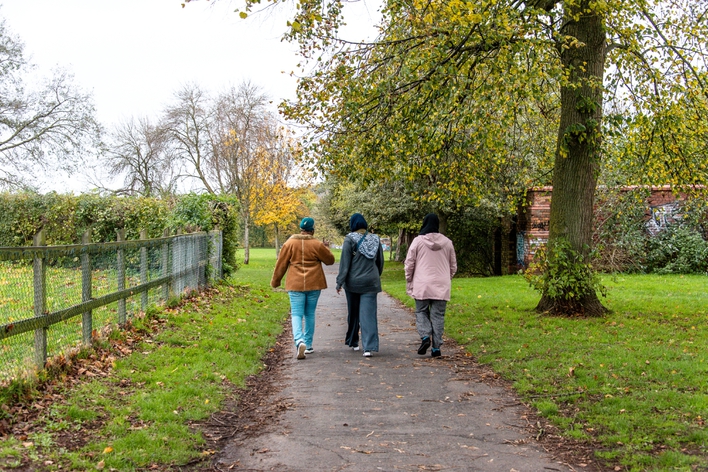
To celebrate Black History Month, we're looking at how local people help create change in their neighbourhood to build stronger, healthier communities. Rehab is part of the steering group with Leeds Muslim Youth Forum as part of their Discrimination and Health project supported by the Trust. With experience in her home country, Sudan, Rehab is now researching how discrimination affects health and wellbeing in her community to ensure that local people's experiences are heard and used to deliver positive change.
I joined Leeds Muslim Youth Forum’s Discrimination and Health project because I have always been interested in research and in raising awareness.
The community is at the centre of this research. We are speaking to people directly, understanding their experiences and listening to the issues affecting their lives.
Before coming to the UK, I carried out research in my own country, Sudan, and after studying Health and Social Care in Leeds, I felt I wanted to use those skills to help my community.
For me, discrimination is not only something I have researched. It is something I have experienced myself.
During my Health and Social Care degree, I had to complete a placement in a pharmacy. One of the managers showed me how the pharmacy worked and helped me learn about medications and the service being provided. Another manager repeatedly asked me to clean.
I felt that I was being treated differently because I am a Black Muslim woman who wears a hijab.
I had chosen the placement to gain experience that would help me complete my studies and write my final report. Instead, I was being asked to clean every day.
Eventually, I challenged this. I explained that I needed to learn about the work of the pharmacy and that I could not write a university report about cleaning. I told him that I had come there to learn and that I deserved the same opportunity as everyone else.
I raised the issue with my university and moved to another placement, where I completed my hours successfully.
Looking back, I think if I had not been confident enough to speak up for myself, the experience could easily have affected my education and my future. That is why it is so important that people understand their rights and feel able to challenge discrimination when they experience it.
I have also heard many stories from other people in the community about the challenges affecting their health and wellbeing.
Housing is one of the issues that comes up regularly. Some people feel they face discrimination because of their religion or background when trying to access services. Discrimination is often one of the risk factors affecting people's wellbeing.
Safety is another issue. In Harehills, many people say they do not feel safe, particularly at night. That affects people's mental health. If someone feels unsafe walking through the park, travelling to and from work, it can affect their confidence, their employment and ultimately their wellbeing.
For me, one of the most important things is ensuring that research leads to change. If people identify a problem, they need to see action. That is how trust is built.
Rehab
Steering Group Member, Leeds Muslim Youth Forum
One of the biggest concerns is that people are often reluctant to report discrimination or hate crime.
Every year I attend events run by West Yorkshire Police about hate crime and awareness raising. The message is always the same: many incidents go unreported.
People often feel there is a stigma around speaking up. Some believe they will not be listened to or that nothing will change. As a result, some people simply move away from an area rather than report what has happened to them.
I know families who have moved cities because their children were experiencing bullying or discrimination and they felt they had no other option. That is not a solution, but it shows the impact these experiences can have on people's lives.
As an immigrant, I know how difficult it can be to understand a new system. English is not my first language, and many members of my community also experience language barriers. The UK system is very different and people need information to help them understand how things work and where to go for support.
I think there is more that could be done to help newcomers settle into life in the UK. People need information about services, laws and the systems that affect their everyday lives. That information should be available in a form and language that people can understand. Some people may also need mental health support after the experiences they have gone through before arriving here.
The aim of our research is ultimately to improve wellbeing. We are looking at health inequalities and the factors that prevent people from enjoying equal health outcomes. By understanding people's experiences and raising awareness, we hope to contribute to healthier communities.
One thing that has always been important to me is sharing information that can help others. Whether it is about health, law or something else, raising awareness matters. If we know something that could help another person, we should share it.
When I think about this year's Black History Month theme, Honouring Our Communities, I think about the importance of working together.
Health, education, policing, local authorities and community organisations all have a role to play. These issues are connected. Good health is linked to safety, education, housing, income and access to information.
Community organisations can help people understand their rights, access support and make their voices heard. They can also create opportunities for people to come together and share their experiences.
For me, one of the most important things is ensuring that research leads to change.
If people take the time to share their experiences, they need to see results. If residents say a street feels unsafe because there is no lighting, they need to see that lighting improved. If people identify a problem, they need to see action.
That is how trust is built.
When communities can see that their experiences are being listened to and that change is possible, people are more likely to get involved, speak up and contribute in the future.
That is what I hope this research will achieve. I want it to help ensure that people's voices are heard, that the issues affecting them are recognised, and that communities can see meaningful change as a result.
Subscribe
Join our email newsletter and stay up to date with our latest funding announcements and policy updates.