Racially minoritised communities
Across the UK, racially minoritised communities are more likely to face poorer health outcomes and to spend fewer years in good health, although the picture varies between groups and conditions. Recent UK evidence continues to show that avoidable differences in health are closely tied to deprivation, exclusion and racism (NHS Race and Health Observatory, 2025).
These inequalities are shaped by the wider determinants of health, including income, secure work, housing and the local environment. In the UK, people from many racially minoritised groups remain more likely to live in poverty, experience unemployment or insecure work, and live in overcrowded housing (GOV.UK Ethnicity facts and figures, 2025). Labour market data also continues to show higher unemployment rates for many minority ethnic groups than for white groups (ONS, 2026; GOV.UK Ethnicity facts and figures, 2024).
A growing body of evidence shows that racism and discrimination harm health directly and indirectly. They can increase stress, undermine mental wellbeing, damage trust in services, and restrict access to good work, safe housing and high-quality care. Structural racism also shapes how institutions and systems operate, which can leave some communities excluded from full participation in civic, economic and workplace life (NHS Race and Health Observatory, 2025).
These disadvantages accumulate over the life course. Long-term exposure to poorer housing, financial insecurity, discrimination and barriers to services can increase the risk of chronic illness and poorer mental health in later life. For some older people, language barriers, isolation and reduced access to culturally appropriate support can further widen health inequalities (Marmot Review, 2020).

Our work with communities experiencing racial inequity and health
Many of our funded partners are led by and working with people from communities experiencing racial inequity to improve health in various ways. This could be helping people to improve employability through education and skills, tackling local issues such as housing, or growing social connections for groups such as refugee women, or working in specific neighbourhoods.
Our programmes on Discrimination and Health, Advice for Health and Nature for Health all have specific partners with expertise in working with racially minoritised communities, including people seeking asylum, South Asian women, refugees, and Gypsy, Roma and Traveller communities.
The impact of the Covid-19 pandemic
The COVID-19 pandemic exposed these inequalities sharply, but it did not create them. Since then, the evidence has continued to point to the same underlying drivers: poverty, unequal exposure to risk at work, overcrowded housing, barriers to information and services, and discrimination within wider systems.
In a current UK context, the challenge is not only to recognise these inequalities but to act on their root causes across public services, employment, housing and health care (NHS England, 2022; NHS Race and Health Observatory, 2025).
When you experience discrimination in your job search and are out of work it has a negative impact on your mental health. We help people rebuild their confidence and take this positivity into job interviews
Lucky Pemu
African Caribbean Community Association, Sunderland
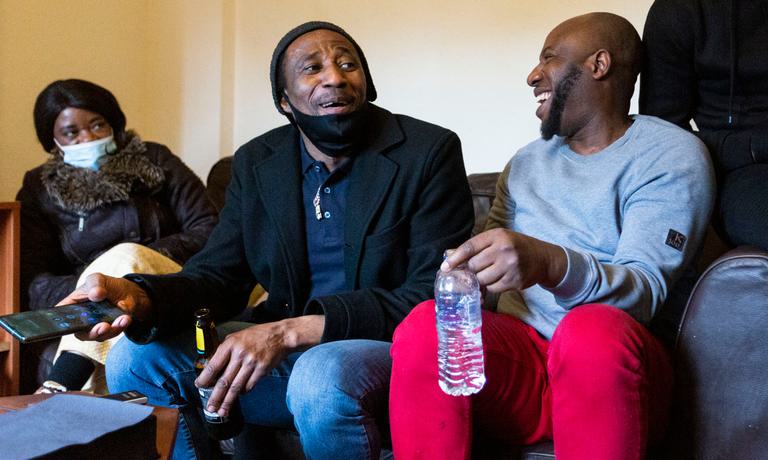

Sunderland and South Tyneside Centre For People Of African Heritage
Regular and culturally appropriate meetings and activities for black people from diverse backgrounds in Sunderland and South Tyneside. The meetings are held at a fully accessible venue and provide a range of activities including employment support.
Key data on racial inequity and health
GOV.UK Ethnicity facts and figures (2025) Overcrowded households. Available at: https://www.ethnicity-facts-figures.service.gov.uk/housing/housing-conditions/overcrowded-households/latest/
Marmot, M., Allen, J., Boyce, T., Goldblatt, P. and Morrison, J. (2020) Health Equity in England: The Marmot Review 10 Years On. London: Institute of Health Equity. Available at: https://www.instituteofhealthequity.org/resources-reports/marmot-review-10-years-on
NHS England (2022) Core20PLUS5 – An approach to reducing healthcare inequalities for children and young people. Available at: https://www.england.nhs.uk/about/equality/equality-hub/national-healthcare-inequalities-improvement-programme/core20plus5/core20plus5-cyp
NHS Race and Health Observatory (2025) Research. Available at: https://nhsrho.org/our-research/
Office for National Statistics (2026) A09: Labour market status by ethnic group. Available at: https://www.ons.gov.uk/employmentandlabourmarket/peopleinwork/employmentandemployeetypes/datasets/labourmarketstatusbyethnicgroupa09